


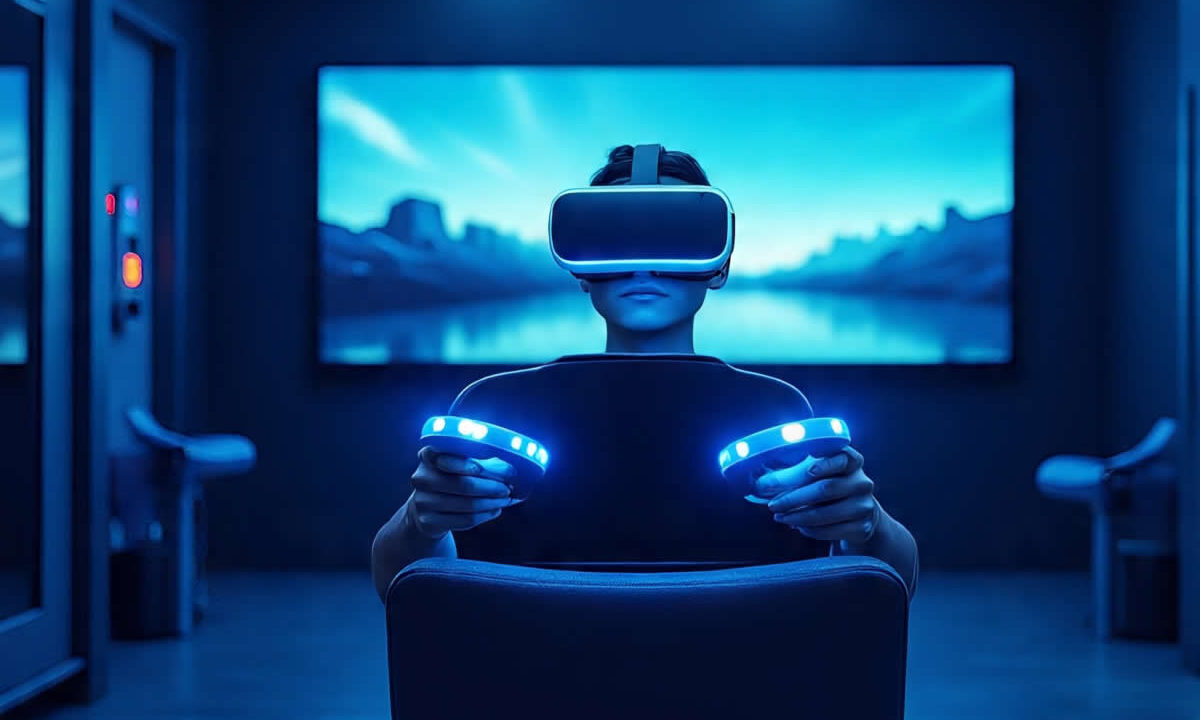
Virtual Reality (VR) has evolved far beyond gaming — it’s becoming a new dimension of human experience. Once considered futuristic, VR is now transforming industries like education, healthcare, entertainment, real estate, and even workplace collaboration. By simulating realistic environments, VR allows people to experience, learn, and interact in ways that were previously impossible.
In education, students can now explore historical landmarks, conduct virtual science experiments, or walk through human anatomy — all in 3D environments that engage both the mind and senses. In healthcare, VR therapy is helping patients manage anxiety, trauma, and chronic pain through immersive mental conditioning. And in business, virtual meetings are taking collaboration to a whole new level, allowing participants to “be” in the same room regardless of location.
What sets VR apart is its ability to evoke emotional presence. When you put on a VR headset, your brain suspends disbelief — it reacts to simulated events as if they were real. This psychological engagement is what makes VR so powerful and effective for training, storytelling, and empathy-driven experiences.
The future of VR lies in greater realism and accessibility. As devices become lighter, more affordable, and integrated with AI, virtual reality will shift from niche entertainment to a universal tool for communication, creativity, and connection. The world is entering an era where our most meaningful experiences might not happen in reality — but through it.




One reply on “The Future Is Immersive: How Virtual Reality Is Redefining Human Experience”
https://shorturl.fm/hqt7c